Getting an Oil Change? Here’s What Else Should Be Checked at the Same Time
October 30, 2026
An oil change covers the engine's routine service, but what about everything else on the car? A tire can wear unevenly, a hose can start to weep, and a battery cable can work itself loose, all without a hint of trouble until the day it matters.
That's why an oil change visit is a good time to check those areas and talk about what's coming up for maintenance. Be clear on the scope, because changing the oil doesn't automatically include every inspection or service. Ask what will be checked, and mention anything new you've noticed.
Tire Checks Can Reveal Problems Beyond Tread Depth
Tires deserve a look at pressure, tread, cuts, bulges, and odd wear patterns. The inside edge can be far more worn than the part you see when you walk around the car. A tread depth number alone won't tell you whether a sidewall is damaged or a tire keeps losing air.
Uneven wear can point to alignment, suspension, pressure, or rotation trouble. Treat the pattern as a clue, not proof that one adjustment will cure everything. Measure accurately and follow the cold values listed for your vehicle. And the maximum number molded into the sidewall? That's the tire's limit, not the pressure to run every day.
Brake Inspection Should Include More Than Pad Thickness
A brake inspection can cover accessible pads, rotors, hoses, and any signs of fluid leaks. Pad wear can differ between the inner and outer sides of a wheel, and a glance through the spokes can miss that. How deep the check goes should match what's bothering you.
So tell us about grinding, pulling, a pedal that feels different, or vibration when you stop. Those symptoms may deserve a closer look than the routine check that comes with an oil change. Also review brake fluid against the vehicle's requirements, including its condition and when it was last replaced. Topping it off won't fix a leak or refresh old fluid.
Fluid Checks Help Catch Leaks And Missed Service
Your cooling system, brake system, transmission, and other fluid-filled parts each have their own service schedule, and an oil change doesn't reset any of them. Check levels and visible leaks where the vehicle's procedures allow, and investigate any fluid that disappears without explanation.
Not every car has a transmission dipstick, either. A sealed transmission may need a specific temperature and fill procedure. Coolant must be the right specification and concentration too, and mixing products because they look alike invites another problem. If a fluid is low, ask why. Repeated top-offs shouldn't be the whole answer.
Battery And Charging Checks Can Prevent Starting Surprises
A battery inspection can turn up loose connections, corrosion, damaged cables, or a hold-down that isn't doing its job. If the engine has been cranking slowly in the morning, say so, even if the car started fine when you pulled in. A warm restart doesn't reveal everything about a cold-start problem.
When it makes sense, testing can check the battery's condition and the charging system's performance. Modern charging systems vary their output, and some replacement batteries need to be registered or adapted to the car. A low voltage reading on its own doesn't prove the alternator has failed, so the tests should fit your vehicle and the symptoms you describe.
Belts, Hoses, and Filters Deserve A Closer Look
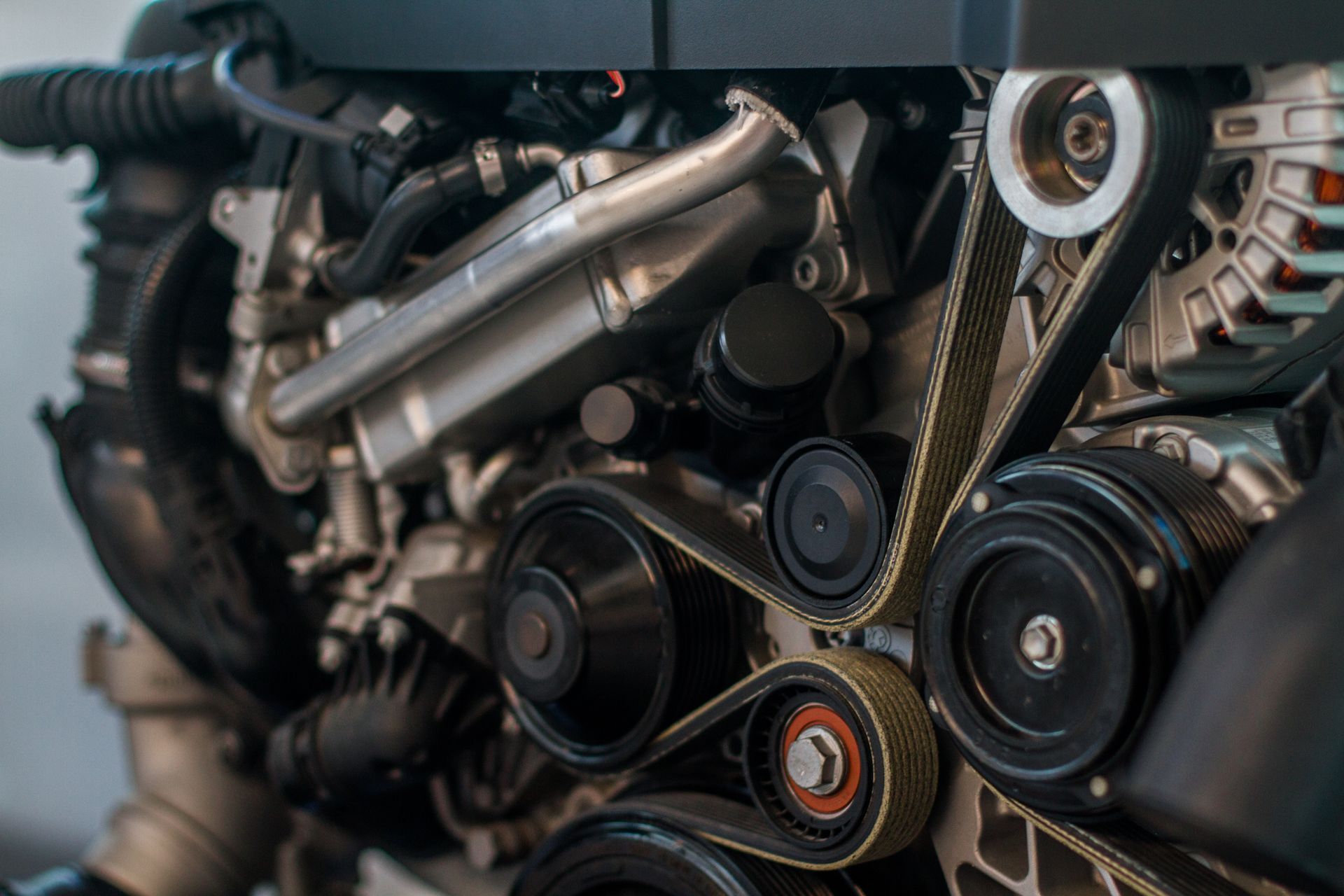
You can check accessible drive belts and coolant hoses for damage, leaks, and signs of aging. Belt noise doesn't always mean the belt itself. A tensioner or pulley might be the culprit. And a hose that looks fine from above can still be leaking at a connection underneath.
Review engine and cabin air filters for condition and service history. They're replaced on different schedules, and the cabin filter doesn't protect the engine's intake. Timing belts need their own review against the manufacturer's interval, and many sit behind covers where you can't see them. A visual check during an oil change can't vouch for every hidden component.
Steering And Suspension Checks Can Explain New Wear
An oil change visit can include a look at the accessible steering and suspension parts for leaks, torn boots, and looseness. These parts affect tire wear and how the car handles bumps. A worn joint can develop play long before it starts making noise.
If you've noticed clunks, wandering, or a steering wheel that sits off-center, ask them to check that specifically. Some joints have to be inspected with the suspension loaded a certain way. If repairs are needed, an alignment should follow. An alignment can't tighten a worn ball joint or bring back a tired control arm bushing.
An Oil Change Is A Good Time To Review Maintenance Records
Mileage, time, and the way you use your vehicle all help determine what's due next. Bring recent service records so we can separate what's been done from what's missing. A clear plan makes it easier to handle routine needs before your next visit sneaks up on you.
A few good questions to ask at your oil change:
- Which checks are included with today's service
- Which findings need attention soon, and which can we just keep an eye on?
- What mileage or date applies to the next scheduled service?
And before you approve any extra work, ask to see what we found and make sure the recommendation makes sense to you.
Get Oil Change Service In Easton, PA, With Jeff's Automotive, Inc
Jeff's Automotive, Inc in Easton, PA, can handle your oil change and help you review your vehicle's condition and upcoming maintenance. Tell us about new noises, warning messages, or changes in how the car drives so we can give those concerns the attention they deserve.
Contact us to schedule your oil change and ask what checks come with your visit.