How Regenerative Braking Boosts Your EV's Range


April 27, 2024

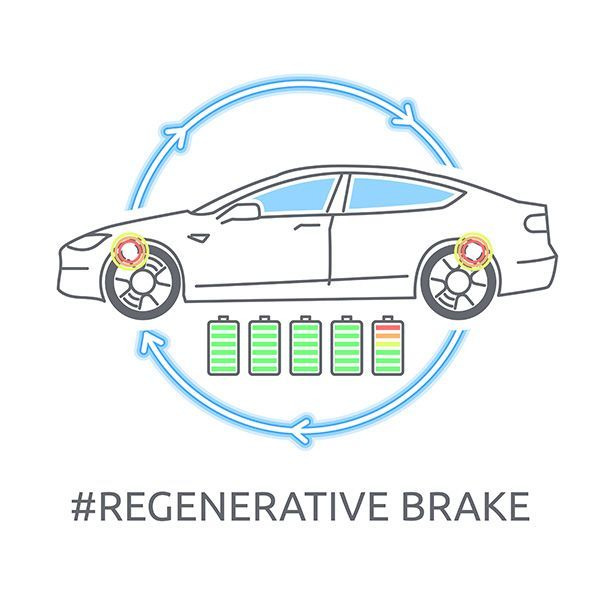
Electric car with circular arrows and battery icons, labeled “#REGENERATIVE BRAKE” | Jeff's Automotive, Inc

Electric vehicles (EVs) have revolutionized the automotive industry with their eco-friendly operation and impressive performance. One key technology contributing to their efficiency is regenerative braking. But how exactly does regenerative braking work, and how does it enhance an EV's range?

What is Regenerative Braking

Regenerative braking is a clever system that converts kinetic energy into usable electric energy during deceleration or braking. Unlike traditional braking systems, which dissipate energy as heat through friction, regenerative braking captures this energy and stores it in the vehicle's battery for later use. This innovative approach not only improves energy efficiency but also extends the driving range of EVs.

The Science Behind Regenerative Braking

When you apply the brakes in an EV equipped with regenerative braking technology, the electric motor reverses its function, acting as a generator instead. As the wheels slow down, they drive the motor, which generates electricity through electromagnetic induction. This electricity is then returned to the battery, replenishing the charge. By harnessing the vehicle's kinetic energy, regenerative braking minimizes energy wastage and maximizes efficiency.

Benefits of Regenerative Braking for EVs:

  • Extended Range: By recovering energy that would otherwise be lost during braking, regenerative braking significantly enhances an EV's driving range. This means fewer stops for recharging and increased convenience for drivers.
  • Improved Efficiency: Regenerative braking improves overall energy efficiency by harnessing kinetic energy and recycling it within the vehicle's electrical system. As a result, EVs equipped with this technology require less energy to operate, reducing their environmental impact.
  • Enhanced Driving Experience: Beyond its environmental benefits, regenerative braking also contributes to a smoother and more responsive driving experience. The transition between acceleration and braking becomes seamless, providing drivers with greater control and confidence on the road.
  • Less Spend on Maintenance: Regenerative braking helps save money by reducing the frequency of brake maintenance, as it lessens the wear and tear on traditional brake components.

Challenges and Considerations

While regenerative braking offers numerous advantages, it's essential to understand its limitations and considerations. Factors such as driving conditions, battery state of charge, and vehicle speed can influence the effectiveness of regenerative braking. Drivers may need some time to adjust their driving habits to fully maximize the benefits of this technology.


Is your car due for maintenance? Keep it in top condition with Jeff's Automotive, Inc. Our expert team specializes in maintenance and repair services tailored to your vehicle's unique needs.

Assorted automotive oil filters arranged in front of a large circular filter element on a white background | Jeff's Automotive, Inc
June 30, 2026
Filters are easy to forget because they do their work quietly. You do not see them cleaning the air, fuel, or oil while you drive. You only notice them when the car starts smelling musty, losing power, using more fuel, or acting like it has not been serviced in too long.
Rear of silver car with a dangling cable on a blue-lit garage floor | Jeff's Automotive, Inc
June 15, 2026
Pennsylvania state inspections and emissions testing can feel stressful when you are not sure what the shop is looking for. Your car might drive fine around town, start every morning, and still have a problem that keeps it from passing. That is what catches many drivers off guard.
Diagram of a car air conditioner system with labeled compressor, condenser, evaporator, fan, drier, and expansion valve. | Jeff's Automotive, Inc
May 29, 2026
A cold A/C vent feels simple when everything is working. You press a button, set the temperature, and expect cool air to show up. Behind that, the system is moving heat out of the cabin instead of creating cold air from nothing.