How Does Car Air Conditioning Work?
May 29, 2026
A cold A/C vent feels simple when everything is working. You press a button, set the temperature, and expect cool air to show up. Behind that, the system is moving heat out of the cabin instead of creating cold air from nothing.
That is the part many drivers never hear explained. Your car’s A/C system is really a heat-transfer system, and every main part has to do its job for the air at the vents to feel right.
Why Car A/C Feels Cold In The Cabin
Your A/C does not make cold air the way a heater makes warm air. It removes heat from the cabin air and sends it outside the vehicle. Once enough heat is removed, the air blowing from the vents feels cold.
That process depends on refrigerant, pressure changes, airflow, and several mechanical parts working together. If one part of the system weakens, becomes restricted, or runs low on refrigerant, the whole system can lose cooling power quickly.
The Refrigerant Carries Heat
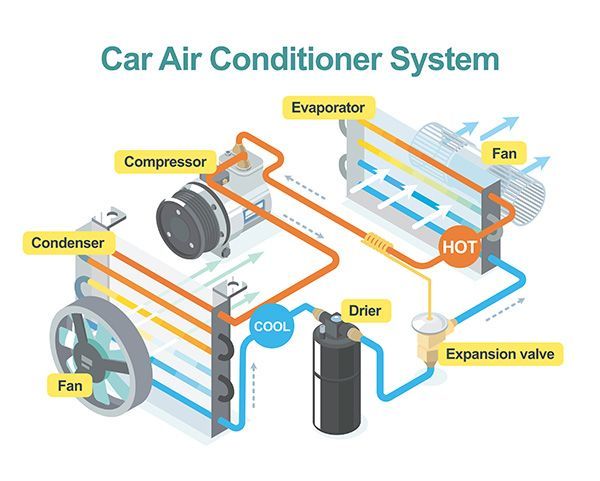
Refrigerant is the fluid that moves through the A/C system and carries heat with it. It changes between gas and liquid as it travels through different parts of the system. Those changes allow it to absorb heat inside the car and release it outside.
When the system is low on refrigerant, the A/C usually cannot move heat as well as it should. The vents may blow slightly cool instead of cold, or the system may cool at highway speed but struggle while the car is sitting still. Low refrigerant also points to a leak, since it is not something the system should use up like fuel.
The Compressor Starts The Process
The compressor is the part that puts refrigerant under pressure and gets it moving through the system. It is driven by the engine belt or, on some newer vehicles, by an electric motor. When you turn on the A/C, the compressor begins pushing refrigerant through the circuit.
A weak compressor can cause poor cooling, strange noises, or cycling that does not feel normal. Since the compressor is one of the more expensive A/C parts, regular maintenance and early attention to cooling system changes can help prevent minor issues from putting extra strain on it.
Heat Leaves Through The Condenser
After the compressor increases the refrigerant pressure, it flows to the condenser. The condenser sits near the front of the vehicle, where air can pass across it as you drive. Its job is to release heat from the refrigerant into the outside air.
If the condenser is blocked, damaged, leaking, or not getting enough airflow, the system will have a harder time cooling the cabin. That is why A/C can feel worse in traffic than it does on the highway. The system needs airflow across the condenser, and a cooling fan problem can make a big difference at low speeds.
The Expansion Valve Drops The Temperature
Once the refrigerant leaves the condenser, it passes through an expansion valve or orifice tube, depending on the vehicle. That small part controls how much refrigerant enters the evaporator. It also creates the pressure drop that helps the refrigerant become cold enough to absorb heat from the cabin air.
A restriction here can cause the system to behave strangely. The A/C may blow cold for a little while, then warm up. It may also cool unevenly or show pressure readings indicating a flow problem. This is one of those areas where an inspection matters because the symptom can feel similar to low refrigerant or compressor trouble.
The Evaporator Cools The Air You Feel
The evaporator is located inside the vehicle, behind the dashboard area. Cabin air passes over the evaporator, and the refrigerant inside absorbs heat from it. The blower motor then sends the cooled air through the vents.
Moisture is removed during this process, too, which is why A/C helps reduce cabin humidity. If the evaporator gets dirty, freezes up, or develops a leak, the vents can lose cooling power. A weak blower motor or clogged cabin air filter can also make the A/C feel poor even when the refrigerant side is working correctly.
Why A/C Problems Show Up In Different Ways
Car A/C problems do not always feel the same. One driver may notice warm air at idle. Another may hear a click from the compressor but never get cold air. Someone else may smell mildew from the vents because moisture has been sitting in the evaporator case.
The most common causes include refrigerant leaks, compressor wear, condenser damage, weak fans, clogged cabin filters, electrical faults, and pressure-control issues. That is why topping off the refrigerant is not always the right answer. If the system is leaking or a part is failing, adding refrigerant only delays the real repair.
A proper A/C check should include vent temperature, refrigerant pressure, signs of leaks, belt operation, fan function, cabin airflow, and electrical controls. That gives a clearer picture of whether the problem is simple, like a cabin filter, or deeper in the refrigerant system.
Get Car Air Conditioning Service In Easton, PA, With Jeff's Automotive, Inc
If your A/C is blowing warm, cooling weakly, or changing temperature while you drive, Jeff's Automotive, Inc in Easton, PA, can check the system and find out why it is no longer removing heat the way it should.