You can have a full tank of gas, fresh tires, and a perfectly running engine, and a thin sheet of ice can still ruin your morning. It always seems to happen when you are already running behind, and you start making quick decisions that feel harmless in the moment. A lot of windshield damage, torn wipers, and foggy visibility issues start right here, in that rushed five-minute scrape.
If you want your glass, wipers, and defroster to last, there are a few moves that help, and a few that quietly cause expensive headaches.
Why Windshield Ice Is Harder On Your Car Than You Think
Ice is not just a visibility issue, it is a stress test for your glass, wipers, and defroster. When temperatures swing, your windshield expands and contracts, and that makes small chips and tiny cracks more likely to grow. Ice also bonds to rubber, so wiper blades can stick to the glass and tear when you force them loose.
Even your HVAC system feels it. A weak battery, low coolant, or a blower motor that is starting to fade can make defrosting painfully slow. If you are fighting ice every morning, it is worth treating it like a system problem, not just a scraping problem.
Do: Set Up Your Defroster The Right Way First
Before you scrape, let the car help you. Start the engine and select the front defrost mode so air is directed at the windshield. Turn the fan speed up gradually, then set the temperature to warm, not necessarily max heat right away, if your car takes time to warm up.
If your vehicle has A/C, turning it on with defrost can help dry the air, which clears fog faster. Cracking a window slightly can also help if the inside is fogging, since it lets moist cabin air escape. Give it a couple of minutes, because scraping goes easier when the ice bond has started to loosen.
Do: Use Tools And Products That Work Without Damaging Glass
A proper ice scraper should feel firm and flat, not sharp or jagged. If you use the right tool, you can clear ice quickly without gouging the glass or stressing the wipers. De-icer sprays can help too, especially when the ice is stubborn or there is a layer of freezing rain.
Here are safe options that usually work well:
- A plastic scraper with a broad, flat edge, and a long handle so you do not lean on the glass
- A soft snow brush for clearing loose snow before you start scraping ice
- A windshield-safe de-icer spray, used as directed, to soften ice and reduce scraping effort
- A clean microfiber towel for wiping meltwater and preventing refreeze at the edges
- A dedicated windshield cover, used the night before, to avoid scraping altogether
If you are tempted to use whatever is in your pocket, it is usually better to pause and find a real scraper.
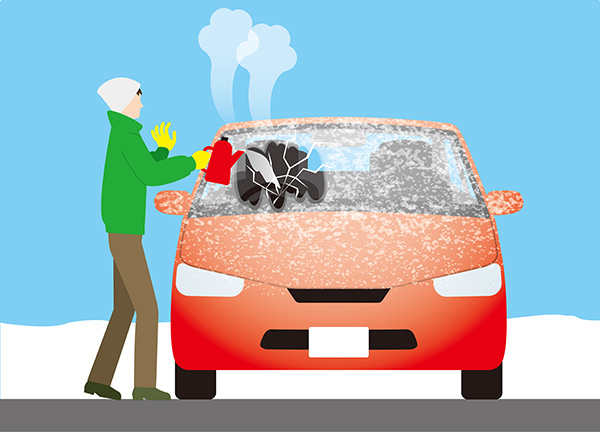
Don't: Pour Hot Water On The Windshield Or Use Metal Objects
This is one of the fastest ways to create a crack you did not have before. Hot water can shock cold glass, and even if it does not crack immediately, it can worsen existing chips. Metal tools like screwdrivers, keys, or putty knives can scratch glass and damage the thin black ceramic border around the edges.
Avoid these common risky moves:
- Hot or boiling water to melt ice quickly
- Credit cards or stiff plastic cards that can snap and scrape unevenly
- Razor blades or metal scrapers meant for paint and adhesives
- Chipping at ice in one concentrated spot with heavy pressure
- Slamming doors repeatedly to shake ice loose, which can stress glass and weather seals
If the ice is thick, patience is cheaper than a windshield replacement.
Don't: Run Wipers Over Ice Or Frozen Slush
Wipers are designed to clear water, not scrape ice. If you run them on a frozen windshield, the rubber edges can tear, the wiper arms can get strained, and the motor can overwork. Even if the blades survive, they often get nicked, and then you end up with streaks for weeks.
Clear the windshield fully before you use the wipers, and make sure the wiper blades are not frozen to the glass. If they are stuck, warm the windshield with defrost for a bit and gently free them, rather than yanking them loose.
Prevention Tips That Make The Next Morning Easier
The easiest de-icing job is the one you prevent. A few small habits can reduce ice buildup and save you time every week.
- Park with the windshield facing away from the prevailing wind when possible, since wind-driven moisture freezes heavier
- Lift wiper arms only if your vehicle allows it safely, and only in heavy ice conditions
- Use a windshield cover or even a simple tarp as a quick overnight shield
- Replace worn wiper blades before winter, since fresh rubber clears meltwater better
- Top off washer fluid with a winter-rated formula so you can clean salt film without freezing lines
When De-Icing Problems Point To A Bigger Issue
If your defroster takes forever, the air never gets warm, or the windshield keeps fogging even after it should be clear, the issue may be in the HVAC or cooling system. Low coolant can reduce heater performance, a clogged cabin air filter can choke airflow, and a weak blower motor can make defrost feel useless. Poor charging performance can also show up here, since a struggling alternator or battery can reduce how well the blower and rear defrost keep up.
If you are constantly fighting ice from the inside as well as the outside, or you notice a sweet smell and foggy windows, that can even point to a heater core problem. Those are situations where an inspection saves a lot of frustration.
Get Windshield De-Icing Help in Easton, PA, with Jeff's Automotive, Inc
We can check your defrost performance, blower strength, cabin air filter condition, and wipers, so you are not guessing every cold morning. We’ll also inspect for chips and cracks that may spread when temperatures drop.
Call Jeff's Automotive, Inc in Easton, PA, to schedule a winter visibility check and make your next icy morning a whole lot easier.