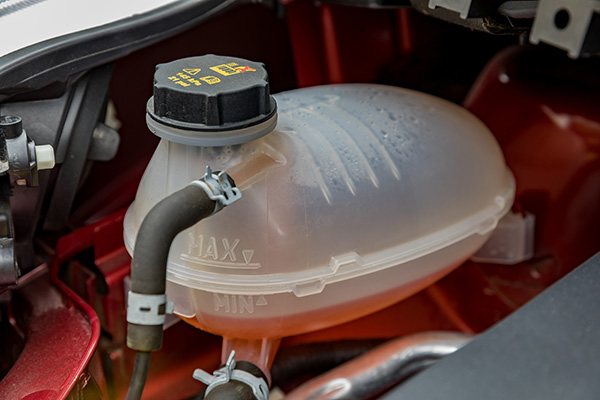
A low coolant reservoir can feel like the car is asking for the same favor over and over. You top it off, everything seems fine, and then the level is down again a week or two later. That cycle makes it hard to know whether you are looking at a minor seep or the start of something that needs attention.
The smartest next step is figuring out why the level is dropping before you keep adding coolant.
What The Coolant Reservoir Level Tells You
The reservoir is not just a storage bottle, but also a buffer as coolant expands and contracts with temperature. When everything is sealed and working properly, the level may move slightly between hot and cold, but it should not keep trending downward. If it does, coolant is leaving the system somewhere, even if you cannot see it yet.
This is one of those checks that belongs in regular maintenance because it can catch trouble early. A steady drop is more meaningful than one low reading after a repair or a seasonal temperature swing. The key is tracking whether you are adding coolant repeatedly, not just once.
Leaks That Evaporate Before You See A Puddle
Coolant can leak onto hot engine parts and evaporate before it ever reaches the ground. That is why many drivers never see a puddle even though the level keeps dropping. A small seep at a hose end or a radiator seam can mist under pressure, then dry up quickly once the engine cools.
Look for clues like a sweet smell after parking or crusty residue near hose connections. Dried coolant often leaves a chalky white or greenish trail, especially around clamps and plastic fittings. When we trace these leaks, we focus on fresh residue and wetness, not old grime that has been there for years.
Cooling System Pressure And The Role Of The Cap
The cooling system is designed to run under pressure, which raises the boiling point and helps control temperature. If the radiator cap or reservoir cap cannot hold the correct pressure, coolant can escape as vapor or push out into the overflow more than it should. It may never drip, but the reservoir level will slowly drop over time.
A weak cap can also allow air to enter as the system cools, which makes the level behavior even more confusing. You might see the reservoir low in the morning, then higher after a drive, then low again the next day. It is a small part, but it can create a big headache when it is not sealing properly.
Air Pockets After Service And Why The Level Changes
After the cooling system works, trapped air can move around and burp out over the first few heat cycles. When that happens, the reservoir level can drop because the air pocket has finally been replaced with coolant. This is fairly common after a hose replacement, thermostat work, or a drain and refill.
The difference is that this usually stabilizes after a short period. If you top it off once or twice and the level holds steady afterward, it was likely air working its way out. If you are topping it off repeatedly for weeks, the system is telling you something else is going on.
Engine Conditions That Consume Coolant
Not every coolant loss is an external leak. Coolant can be consumed internally if it enters a combustion chamber or mixes with engine oil, and sometimes the signs are subtle at first. A sweet smell from the exhaust, persistent white vapor after warm-up, or unexplained overheating are all clues worth taking seriously.
Another sign is coolant loss paired with rough cold starts or a heater that blows hot, then cool, then hot again. Those patterns can point to gas intrusion into the cooling system or circulation problems triggered by low levels. If the reservoir keeps dropping and you cannot find an external leak, it is time to check deeper rather than keep topping off.
What To Check Before You Top It Off Again
Before adding more coolant, check the level when the engine is cool and the car is on level ground. Use the markings on the reservoir and note where it sits, then recheck it a few days later under similar conditions. That simple habit makes the pattern obvious.
Here are a few quick things to look for that often explain repeat low reservoir levels:
- Sweet smell after shutdown, especially near the front of the vehicle
- Chalky residue around hose clamps, radiator seams, or the reservoir
- Dampness at the water pump area or along the underside of the radiator
- A cap seal that looks cracked, flattened, or sticky
- Heater output that changes during the same drive
If you do add coolant, use the correct type and mix, and add small amounts so you do not overfill. Overfilling can push coolant out once it warms up, which can look like a leak when it is really just expansion. If the level drops again after that, it is time for a focused inspection instead of another top-off.
Get Cooling System Service In Easton, PA, With Jeff's Automotive, Inc
If your coolant reservoir keeps dropping, Jeff's Automotive, Inc in Easton, PA, can find the cause and fix it before it turns into an overheating problem. We will check the cap, hoses, radiator, and water pump area, then give you a clear plan for what to do next.
Schedule a visit and get back to worry-free driving.